domingo, 14 de agosto de 2011

Living

Slow bleak awakening from the morning dream
Brings me in contact with the sudden day.
I am alive – this I.
I let my fingers move along my body.
Realization warns them, and my nerves
Prepare their rapid messages and signals.
While Memory begins recording, coding,
Repeating; all the time Imagination
Mutters: You'll only die.

Here's a new day. O Pendulum move slowly!
My usual clothes are waiting on their peg.
I am alive – this I.
And in a moment Habit, like a crane,
Will bow its neck and dip its pulleyed cable,
Gathering me, my body, and our garment,
And swing me forth, oblivious of my question,
Into the daylight – why?

I think of all the others who awaken,
And wonder if they go to meet the morning
More valiantly than I;
Nor asking of this Day they will be living:
What have I done that I should be alive?
O, can I not forget that I am living?
How shall I reconcile the two conditions:
Living, and yet – to die?

Between the curtains the autumnal sunlight
With lean and yellow finger points me out;
The clock moans: Why? Why? Why?
But suddenly, as if without a reason,
Heart, Brain, and Body, and Imagination
All gather in tumultuous joy together,
Running like children down the path of morning
To fields where they can play without a quarrel:
A country I'd forgotten, but remember,
And welcome with a cry.

O cool glad pasture; living tree, tall corn,
Great cliff, or languid sloping sand, cold sea,
Waves; rivers curving; you, eternal flowers,
Give me content, while I can think of you:
Give me your living breath!
Back to your rampart, Death.

Harold Monro in The Faber Book of Modern Verse, Michael Roberts (ed.), Faber & Faber, 1936 (1ª ed.).

sábado, 13 de agosto de 2011

Na estrada


Manifestações de júbilo por toda a China

Descubra aqui porquê. E desta vez não foi o Futre.

Ash Wednesday

I

Because I do not hope to turn again
Because I do not hope
Because I do not hope to turn
Desiring this man's gift and that man's scope
I no longer strive to strive towards such things
(Why should the agèd eagle stretch its wings?)
Why should I mourn
The vanished power of the usual reign?

Because I do not hope to know
The infirm glory of the positive hour
Because I do not think
Because I know I shall not know
The one veritable transitory power
Because I cannot drink
There, where trees flower, and springs flow, for there is
nothing again

Because I know that time is always time
And place is always and only place
And what is actual is actual only for one time
And only for one place
I rejoice that things are as they are and
I renounce the blessèd face
And renounce the voice
Because I cannot hope to turn again
Consequently I rejoice, having to construct something
Upon which to rejoice

And pray to God to have mercy upon us
And pray that I may forget
These matters that with myself I too much discuss
Too much explain
Because I do not hope to turn again
Let these words answer
For what is done, not to be done again
May the judgement not be too heavy upon us

Because these wings are no longer wings to fly
But merely vans to beat the air
The air which is now thoroughly small and dry
Smaller and dryer than the will
Teach us to care and not to care Teach us to sit still.

Pray for us sinners now and at the hour of our death
Pray for us now and at the hour of our death.

T.S. Eliot in The Faber Book of Modern Verse, Michael Roberts (ed.), Faber & Faber, 1936 (1ª ed.).

sexta-feira, 12 de agosto de 2011

Óculos

Usei os mesmos óculos durante mil dias. Pousava-os na estante ao lado da cama no fim do dia, inevitavelmente tornava a tactear à procura deles de manhã. Esqueci-me deles talvez em dezenas de sítios, segui as mais idiotas pistas mentais para os recuperar. Os meus expedientes teriam causado o teu riso. Comecei a usá-los por causa de um homem chamado Anatole, estou certa disso. Uma vez, uma única, deixei-os para trás em fuga de um sítio. Tive de voltar em pontas de pés para os ir buscar. Nos primeiros dias pesavam-me no nariz, uma sensação de desconforto equilibrada pelo facto de pela primeira vez em meses ver claramente as coisas em meu redor. Levava a caixa em que me foram vendidos para toda a parte. Com o tempo deixei-me disso. Através deles vi talvez uma vintena de cidades, os dois gatos, o amado, o fundo da rua sempre ligeiramente desfocado, o Jardim das Delícias de Bosch no Prado, as letras de tamanho médio no cais do outro lado do metropolitano. Não os tirava sequer para jogar ténis. No primeiro dia em que os usei, pude finalmente ver distintamente a cara da professora de literatura latina, beleza famosa entre os alunos de clássicas. Conformei-me à ideia de que eram inevitáveis no dia em que, olhando para o fundo do corredor, confundi o Edgar com a professora de literatura portuguesa contemporânea. Às vezes tirava-os só para olhar em meu redor e ver tudo desfocado. Nos primeiros dias tinha receio de embater contra qualquer coisa com eles na cara, sabes, como quando vais a andar na rua distraído e, bang, em cheio num poste. Com eles postos na cara vi Notorious, Fanny Och Alexander, Cenas de um Casamento, Pierrot le Fou, Ladrões de Bicicletas, centenas de filmes. Hoje partiram-se. Como se fossem qualquer outro objecto vulgar vulgar vulgar, feito de ferro e vidro, que terei de deitar fora antes de se tornar lixo em qualquer canto de uma gaveta.

Aimee Mann, "Amateur"

quinta-feira, 11 de agosto de 2011

Maria Andresen, Dies Irae I

A natureza é escassa e o sol quando brilha é baço;
é furtiva por aqui a alegria
quando quase sem aviso nos visita

há um foco de luz a desenhar o mundo

a luz fría, a luz do desassombro:
porque a morte de Herlofs Marthe
soa e contagia

vai manhã alta no coração de Anne
e altas são as chamas do castigo
— aqui o sol é frio —
assombra-nos como um canto de rotina
Herlofs Marthe e o seu dom pressagiante

a sentença avançará com a sua luz contida
com a sua faca propícia
a sentença avançará na sua forma fria

só Anne convoca o amor, o venenoso amor
e com Martin assim caminha sobre pedras —
ao longe, o som do machado corta frio o ar

Maria Andresen, Lugares 3, Relógio d'Água, Lisboa, 2010 apud AAVV, Poemas com Cinema, Assírio & Alvim, Lisboa, 2011

quarta-feira, 10 de agosto de 2011

Salt and Oil

Three young men in dirty work clothes
on their way home or to a bar
in the late morning. This is not
a photograph, it is a moment
in the daily life of the world,
a moment that will pass into
the unwritten biography
of your city or my city
unless it is frozen in the fine print
of our eyes. I turn away
to read the morning paper and lose
the words. I go into the streets
for an hour or more, walking slowly
for even a man of my age. I buy
an apple but do not eat it.
The old woman who sells it remarks
on its texture and tartness, she
laughs and the veins of her cheeks brown.
I stare into the river while time
refuses to move. Meanwhile the three
begin to fade, giving up
their names and voices, their auras
of smoke and grease, their acrid bouquets.
We shall name one to preserve him,
we shall name him Salt, the tall blond
whose wrists hurt, who is holding back
something, curses or tears, and shaking
out the exhaustion, his blue eyes
swollen with sleeplessness, his words
blasted on the horn of his breath.
We could go into the cathedral
of his boyhood and recapture
the voices that were his, we could
reclaim him from the brink of fire,
but then we would lose the other,
the one we call Oil, for Oil
broods in the tiny crevices
between then and now, Oil survives
in the locked archives of the clock.
His one letter proclaims, “My Dear
President, I would rather not . . .”
One arm draped across the back
of Salt, his mouth wide with laughter,
the black hair blurring the forehead,
he extends his right hand, open
and filthy to take rusted chains,
frozen bearings, the scarred hands
of strangers, there is nothing
he will not take. These two are not
brothers, the one tall and solemn,
the long Slavic nose, the pale eyes,
the puffed mouth offended by the press
of traffic, while the twin is glad
to be with us on this late morning
in paradise. If you asked him,
“Do you calm the roiling waters?”
he would smile and shake his great head,
unsure of your meaning. If you asked
the sources of his glee he would shrug
his thick shoulders and roll his eyes
upward to where the turning leaves
take the wind, and the gray city birds
dart toward their prey, and flat clouds
pencil their obscure testaments
on the air. For a moment
the energy that makes them who
they are shatters the noon’s light
into our eyes, and when we see
again they are gone and the street
is quiet, the day passing into
evening, and this is autumn
in the present year. “The third man,”
you ask, “who was the third man
in the photograph?” There is no
photograph, no mystery,
only Salt and Oil
in the daily round of the world,
three young men in dirty work clothes
on their way under a halo
of torn clouds and famished city birds.
There is smoke and grease, there is
the wrist’s exhaustion, there is laughter,
there is the letter seized in the clock
and the apple’s tang, the river
sliding along its banks, darker
now than the sky descending
a last time to scatter its diamonds
into these black waters that contain
the day that passed, the night to come.

Philip Levine (a.k.a., o novo poet laureate americano) in The Mercy, Alfred A. Knopf, 1999. Gamado ao blogue do The New York Times. Este poema é tudo o que um poema deve ser.

segunda-feira, 8 de agosto de 2011

Conversion

Lighthearted I walked into the
valley wood
In the time of hyacinths,
Till beauty like a scented cloth
Cast over, stifled me. I was bound
Motionless and faint of breath
By loveliness that is her own eunuch.

Now pass I the final river
Ignominiously, in a sack, without a sound,
As any peeping Turk to the Bosphorous.

T. E. Hulme, in The Faber Book of Modern Verse, Michael Roberts (ed.), Faber & Faber, 1936 (1ª ed.).

domingo, 7 de agosto de 2011

Para ler

http://senhor-teste.blogspot.com/

Livros e realidade

Burn

...they rushed down the street together digging everything in the early way they had which was later now become so much sadder and perceptive.. but then they danced down the street like dingldodies and I shambled after as usual as I've been doing all my life after people that interest me, because the only people that interest me are the mad ones, the ones that are mad to live, mad to talk, desirous of everything at the same time, the ones that never yawn or say a common place thing.. but burn, burn, burn like roman candles across the night.

Jack Kerouac, On The Road: The Original Scroll, Penguin Books, 2008

sábado, 6 de agosto de 2011

Sem nome #4

         pronunciando uma única ocasião e ele a julgar que imensas, a estrangeira loira constantemente a partir, o pingo no sapato
         - Se conseguíssemos adivinhar o que lhe vai na cabeça
         e não conseguiam claro, nunca viram a estrangeira loira nem o afinador e a dúvida sobre se ele os viu ou os criou apenas, nenhuma visita no quarto que o distraísse de si, o pingo no sapato
         - As pessoas hão-de permanecer um mistério
         e mistério nenhum, as pessoas idênticas aos besouros e ás vacas, os besouros queimam-se na lanterna do alpendre e as vacas tremem uma tarde ou duas, tombam tremendo, desistem das tremuras, enterram-se e só então nos espantamos que tão grandes, moem não erva, paciência, a erva um disfarce, tal como me alimento de paciência hoje, se necessitasse de um braço não tinha, de uma perna não havia mas o pulso continuava a empurrá-lo para diante sem que existisse um adiante, existia a parede a cada momento mais próxima e nada atrás dela salvo a avó
         - O que tu emagraceste

sexta-feira, 5 de agosto de 2011

Para não dizerem que não alimento os miúdos com cultura clássica

For Anne Gregory

"Never shall a young man,

Thrown into despair

By those great honey-coloured

Ramparts at your ear,

Love you for yourself alone

And not your yellow hair."


"But I can get a hair-dye

And set such colour there,

Brown, or black, or carrot,

That young men in despair

May love me for myself alone

And not my yellow hair."


W. B. Yeats, in The Faber Book of Modern Verse, Michael Roberts (ed.), Faber & Faber, 1936 (1ª ed.).

quinta-feira, 4 de agosto de 2011

Tens de ver isto


Howl de Rob Epstein e Jeffrey Friedman, 2010.

Byzanthium

The unpurged images of day recede;
The Emperor's drunken soldiery are abed;
Night resonance recedes, night walkers' song
After great cathedral gong;
A starlit or a moonlit dome disdains
All that man is,
All mere complexities,
The fury and the mire of human veins.

Before me floats an image, man or shade,
Shade more than man, more image than a shade;
For Hades' bobbin bound in mummy-cloth
May unwind the winding path;
A mouth that has no moisture and no breath
Breathless mouths may summon;
I hail the superhuman;
I call it death-in-life and life-in-death.

Miracle, bird or golden handiwork,
More miracle than bird or handiwork,
Planted on the star-lit golden bough,
Can like the cocks of Hades crow,
Or, by the moon embittered, scorn aloud
In glory of changeless metal
Common bird or petal
And all complexities of mire or blood.

At midnight on the Emperor's pavement flit
Flames that no faggot feeds, nor steel has lit,
Nor storm disturbs, flames begotten of flame,
Where blood-begotten spirits come
And all complexities of fury leave,
Dying into a dance,
An agony of trance,
An agony of flame that cannot singe a sleeve.

Astraddle on the dolphin's mire and blood,
Spirit after Spirit! The smithies break the flood.
The golden smithies of the Emperor!
Marbles of the dancing floor
Break bitter furies of complexity,
Those images that yet
Fresh images beget,
That dolphin-torn, that gong-tormented sea.

1930

W. B. Yeats, in The Faber Book of Modern Verse, Michael Roberts (ed.), Faber & Faber, 1936 (1ª ed.).
quarta-feira, 3 de agosto de 2011

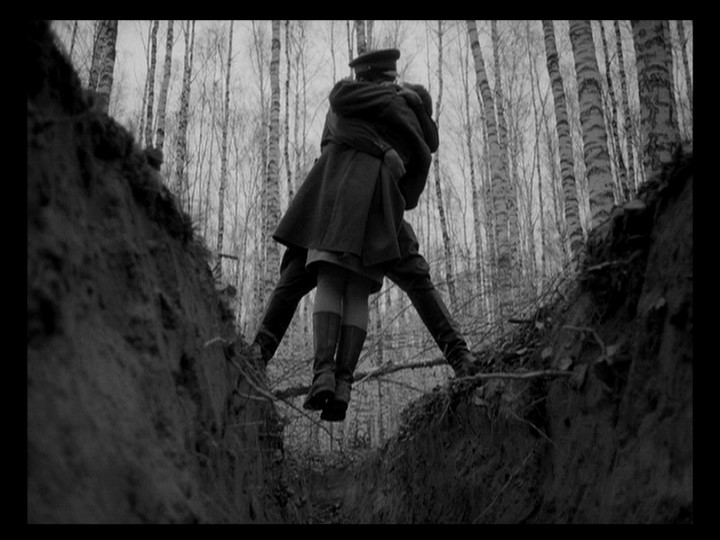
Não sei já falei disto

Há uns meses atrás, na defesa de tese de uma amiga, cujo o tema era qualquer coisa como A Oração no Tratado das Bençãos do Talmude da Babilónia, parte do público foi transportado para o que pode ser descrito de maneira idiota (mas eficaz para efeitos de entendimento da coisa) um momento Disney, quando a minha amiga conta de como Deus criou as letras da Torah, que eram criaturas vivas e preexistentes à criação. Daí toda uma classe de estudiosos ter dedicado a vida à conservação do texto e, para que nenhuma letra perecesse, todas eram contadas. Acho que já falei disto aqui. Há pouco apercebi-me que, para mim, a representação mental que mais se aproxima dessa história é qualquer coisa como isto: